




American Trickster
“A stunning, genre-stretching biography. Marshall’s philosophical acuity, honest self-examination, and edgy style make this book a fascinating quest narrative.”
—Carol Sklenicka“Marshall paints a devastating portrait of the spiritual leader’s genuine allure, and the febrile cultural landscape of the sixties that proved such a fertile ground for his fabrications.”
—Ranbir Sidhu“Through exhaustive research, incisive analysis, and bravura storytelling, Ru Marshall reveals the true story of one of twentieth century’s most mysterious figures.”
—Matthew Sharpe“Anyone who wants to understand how charisma, cults, and today’s politics work, should read this.”
—Helen Benedict“Marshall reaches deep into philosophy, film, history, and anthropology to examine Castaneda’s sinister legacy.”
—Terese Svoboda“I hear Ru Marshall when they aren’t there. Certain writers leave their music in your head, and it stays. . . . Ru is a master storyteller who will keep seducing you with language.”
—Laurie Stone“A project of epic proportions, pulled off with remarkable élan.”
—Kirkus Reviews“Ru Marshall’s biography is exhaustive, yet often a page-turner, taking us far and deep into the alternate universe that Casteneda created. Fascinating.”
—Christopher L. Miller“An engrossing expose of a con man who began his sinister career by pulling off one of the great publishing hoaxes of the 20th century...a genre-defying cautionary tale.”
—Don Lattin“A triumph: American Trickster is thrillingly researched, brilliantly argued, written with verve, and impossible to put down...the definitive—as well as lyric—guide to Casteneda.”
—Lisa Cohen“Marshall reveals in this detailed, well-documented, and revelatory biography, early suspicions...that Castaneda’s writings are mostly, if not entirely, fictional.”
—Booklistabout the bookabout
Twenty years in the making, American Trickster: The Hidden Lives of Carlos Castaneda unravels the story of the secretive faux-anthropologist who pulled off one of the greatest literary hoaxes in modern history. Both an investigation of the techniques employed by charismatic narcissists and a study of the cult dynamics that still shape American life, American Trickster defies conventional biography. It emerges as a chilling allegory for the Trump era, a trenchant critique of academia’s complicity in distorting and erasing Indigenous culture, and a deep dive into the mechanics of New Age spiritual abuse.
In 1968, the University of California Press published Castaneda’s first book, The Teachings of Don Juan, which described his supposed encounters with a Yaqui shaman who initiated him into a secret world of peyote-fueled visions and ancient knowledge never before shared with a “Westerner.” Castaneda was quickly hailed as a revolutionary figure. Admirers ranged from John Lennon and Joni Mitchell to Federico Fellini, George Lucas, and Octavio Paz. His books became international bestsellers and remain the most popular titles ever published on Native American spirituality—despite having little to no connection to actual Indigenous practices.
With the endorsement of some of anthropology’s leading figures, his work at first went unchallenged. Then, in 1973, Time magazine published a searing exposé revealing that Castaneda wasn’t who he claimed to be. As his academic credibility unraveled, he turned inward, building a secretive cultic group that blurred the line between fiction and reality. When Castaneda was diagnosed with liver cancer, he told his disciples he would not die, but burn from within and ascend to another realm—and invited them to join him. After his death in 1998, five of his closest female followers vanished. They are widely believed to have taken their own lives.
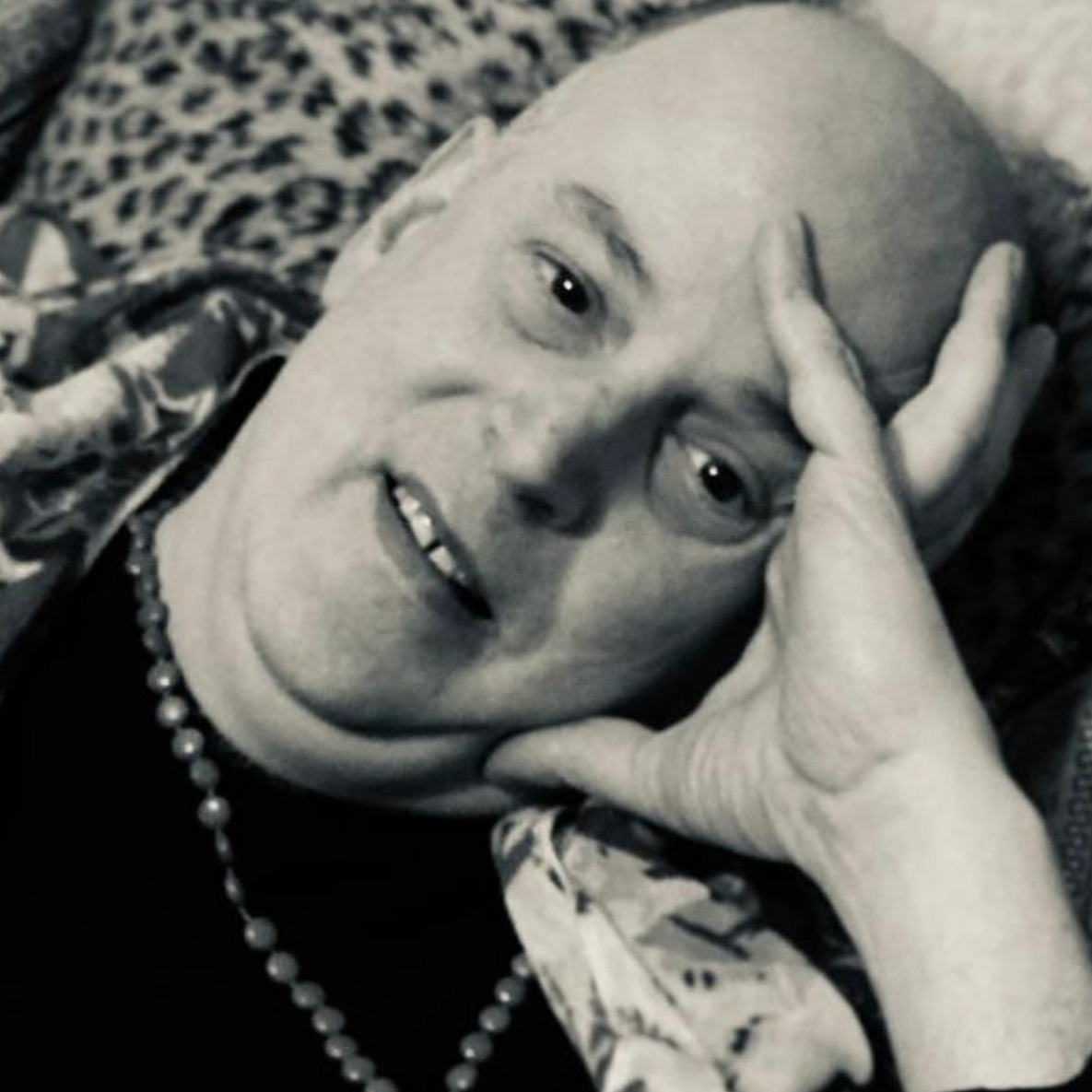
About The Author / Editor
Preview
In the summer of 1967, some hundred and fifty thousand young people poured into San Francisco—the Summer of Love. Some indeed wore flowers in their hair. The invasion alarmed the authorities. The hippies, as they’d been media dubbed, rejected all authority. Or tried to (authorities of a new sort kept popping up). Rejected consumerism, or tried to (they soon found themselves commodified). Experimented with drugs: marijuana, hashish, speed, mushrooms, and LSD. Many had extraordinary psychedelic experiences. The veil of conventional reality had been rent. But what lay behind it? They knew they’d been changed. But how? Some turned to the Hindu and Buddhist traditions in their search for understanding. Some saw God. Others, something darker.
Carlos Castaneda, then an unknown dropout from UCLA’s anthropology grad program, did not come to San Francisco. Never would he have worn a flower in his hair. He had nothing but contempt for the behavior on display in the Haight. He’d no use for Timothy Leary or Allen Ginsberg. “Peace and Love”: Carlos wasn’t into either.
It wasn’t only disgust that kept him from heading up the coast. He was immersed in the anguishing business of finishing the book that would change his life and many others’, which would be released a year later by the University of California Press. It was titled The Teachings of Don Juan: A Yaqui Way of Knowledge and was accompanied by endorsements from some of anthropology’s most eminent figures, including Edmund Carpenter and Walter Goldschmidt, then the chair of UCLA’s anthropology department, who wrote the forward. The name of Castaneda’s most important backer, the radical sociologist Harold Garfinkel, didn’t appear—except in the acknowledgments. Superlative reviews soon began to pour in.
It’s the fate of those authors who are remembered at all to exist in popular memory as a word or at best as a few. Melville: whales. Proust: memory. For Castaneda, the word is, undoubtedly, drugs. Although they appear in only two of his ten books, although he spent most of his career trying to escape the association, this link would never be broken. And certainly, for many, his books were little more than a prop in the theater of the psychedelic experience. But for others they were much more. In The Teachings, Castaneda writes of his purported apprenticeship with an elderly Yaqui Indian, don Juan, who initiates him into a strange, powerful sorceric world. The plot is simple: Will Carlos (the character) be able to let go of his Western worldview and its limiting rationalism, in order to become, in don Juan’s words—or Castaneda’s—a warrior, a man of knowledge? The book’s great reversal: The academic who has come to study the Indian “shaman” becomes instead the one who’s scrutinized. Of just what use are all his objective tools of measurement on this journey across a border (which is, from the opening pages, a dense metaphor) when he’s confronted by the powerful “separate reality” of don Juan?
Who uses three psychotropic plants to instruct the fictional Carlos. Or, in the terms of don Juan’s world (which the reader must decide if she’ll accept, thus putting her in the same position as the character Carlos), the plants—datura, also known as jimsonweed or the devil’s-weed, mushrooms, and peyote—are the teachers. And they’re compelling teachers. In contrast to the education Castaneda was receiving at UCLA, they taught through direct experience. Their lessons were terrifying. Under the tutelage of datura, Carlos turns into a crow, and sees as a crow sees while he flies as a crow flies. Later, demonstrating the extent to which he’s still imprisoned by an academic mindset, he questions whether the experience was real. Don Juan then shreds this “objective” worldview into miniscule bits. But the question remains: Will Carlos ever be able to let go of the Western perspective to which he’s so attached? Will he ever be able to see?
This question echoed those confronted by millions whose minds psychedelics had blown open, as well as those often faced (but much less often discussed) by anthropologists in the field. To understand a phenomenon, was it sufficient to study the phenomenon from the outside (as the positivists, who then dominated the social sciences, believed)? Or did one need, in Castaneda’s words, to make “the leap,” to cross over and become the phenomenon? The Teachings demonstrated just how terrifying this choice could be. In the words of the UC Press, it demanded of its audience “a revolution in cognition.” Castaneda, as one anthropologist would put it, “provided in concrete form things we had abstractly conceptualized but didn’t know how to articulate or use.” He turned ideas into dramas—into things.
in the media
Related Interest
Related Interest
American Trickster
“A stunning, genre-stretching biography. Marshall’s philosophical acuity, honest self-examination, and edgy style make this book a fascinating quest narrative.”
—Carol Sklenicka“Marshall paints a devastating portrait of the spiritual leader’s genuine allure, and the febrile cultural landscape of the sixties that proved such a fertile ground for his fabrications.”
—Ranbir Sidhu“Through exhaustive research, incisive analysis, and bravura storytelling, Ru Marshall reveals the true story of one of twentieth century’s most mysterious figures.”
—Matthew Sharpe“Anyone who wants to understand how charisma, cults, and today’s politics work, should read this.”
—Helen Benedict“Marshall reaches deep into philosophy, film, history, and anthropology to examine Castaneda’s sinister legacy.”
—Terese Svoboda“I hear Ru Marshall when they aren’t there. Certain writers leave their music in your head, and it stays. . . . Ru is a master storyteller who will keep seducing you with language.”
—Laurie Stone“A project of epic proportions, pulled off with remarkable élan.”
—Kirkus Reviews“Ru Marshall’s biography is exhaustive, yet often a page-turner, taking us far and deep into the alternate universe that Casteneda created. Fascinating.”
—Christopher L. Miller“An engrossing expose of a con man who began his sinister career by pulling off one of the great publishing hoaxes of the 20th century...a genre-defying cautionary tale.”
—Don Lattin“A triumph: American Trickster is thrillingly researched, brilliantly argued, written with verve, and impossible to put down...the definitive—as well as lyric—guide to Casteneda.”
—Lisa Cohen“Marshall reveals in this detailed, well-documented, and revelatory biography, early suspicions...that Castaneda’s writings are mostly, if not entirely, fictional.”
—Booklistabout the bookabout
Twenty years in the making, American Trickster: The Hidden Lives of Carlos Castaneda unravels the story of the secretive faux-anthropologist who pulled off one of the greatest literary hoaxes in modern history. Both an investigation of the techniques employed by charismatic narcissists and a study of the cult dynamics that still shape American life, American Trickster defies conventional biography. It emerges as a chilling allegory for the Trump era, a trenchant critique of academia’s complicity in distorting and erasing Indigenous culture, and a deep dive into the mechanics of New Age spiritual abuse.
In 1968, the University of California Press published Castaneda’s first book, The Teachings of Don Juan, which described his supposed encounters with a Yaqui shaman who initiated him into a secret world of peyote-fueled visions and ancient knowledge never before shared with a “Westerner.” Castaneda was quickly hailed as a revolutionary figure. Admirers ranged from John Lennon and Joni Mitchell to Federico Fellini, George Lucas, and Octavio Paz. His books became international bestsellers and remain the most popular titles ever published on Native American spirituality—despite having little to no connection to actual Indigenous practices.
With the endorsement of some of anthropology’s leading figures, his work at first went unchallenged. Then, in 1973, Time magazine published a searing exposé revealing that Castaneda wasn’t who he claimed to be. As his academic credibility unraveled, he turned inward, building a secretive cultic group that blurred the line between fiction and reality. When Castaneda was diagnosed with liver cancer, he told his disciples he would not die, but burn from within and ascend to another realm—and invited them to join him. After his death in 1998, five of his closest female followers vanished. They are widely believed to have taken their own lives.
About The Author / Editor
Preview
In the summer of 1967, some hundred and fifty thousand young people poured into San Francisco—the Summer of Love. Some indeed wore flowers in their hair. The invasion alarmed the authorities. The hippies, as they’d been media dubbed, rejected all authority. Or tried to (authorities of a new sort kept popping up). Rejected consumerism, or tried to (they soon found themselves commodified). Experimented with drugs: marijuana, hashish, speed, mushrooms, and LSD. Many had extraordinary psychedelic experiences. The veil of conventional reality had been rent. But what lay behind it? They knew they’d been changed. But how? Some turned to the Hindu and Buddhist traditions in their search for understanding. Some saw God. Others, something darker.
Carlos Castaneda, then an unknown dropout from UCLA’s anthropology grad program, did not come to San Francisco. Never would he have worn a flower in his hair. He had nothing but contempt for the behavior on display in the Haight. He’d no use for Timothy Leary or Allen Ginsberg. “Peace and Love”: Carlos wasn’t into either.
It wasn’t only disgust that kept him from heading up the coast. He was immersed in the anguishing business of finishing the book that would change his life and many others’, which would be released a year later by the University of California Press. It was titled The Teachings of Don Juan: A Yaqui Way of Knowledge and was accompanied by endorsements from some of anthropology’s most eminent figures, including Edmund Carpenter and Walter Goldschmidt, then the chair of UCLA’s anthropology department, who wrote the forward. The name of Castaneda’s most important backer, the radical sociologist Harold Garfinkel, didn’t appear—except in the acknowledgments. Superlative reviews soon began to pour in.
It’s the fate of those authors who are remembered at all to exist in popular memory as a word or at best as a few. Melville: whales. Proust: memory. For Castaneda, the word is, undoubtedly, drugs. Although they appear in only two of his ten books, although he spent most of his career trying to escape the association, this link would never be broken. And certainly, for many, his books were little more than a prop in the theater of the psychedelic experience. But for others they were much more. In The Teachings, Castaneda writes of his purported apprenticeship with an elderly Yaqui Indian, don Juan, who initiates him into a strange, powerful sorceric world. The plot is simple: Will Carlos (the character) be able to let go of his Western worldview and its limiting rationalism, in order to become, in don Juan’s words—or Castaneda’s—a warrior, a man of knowledge? The book’s great reversal: The academic who has come to study the Indian “shaman” becomes instead the one who’s scrutinized. Of just what use are all his objective tools of measurement on this journey across a border (which is, from the opening pages, a dense metaphor) when he’s confronted by the powerful “separate reality” of don Juan?
Who uses three psychotropic plants to instruct the fictional Carlos. Or, in the terms of don Juan’s world (which the reader must decide if she’ll accept, thus putting her in the same position as the character Carlos), the plants—datura, also known as jimsonweed or the devil’s-weed, mushrooms, and peyote—are the teachers. And they’re compelling teachers. In contrast to the education Castaneda was receiving at UCLA, they taught through direct experience. Their lessons were terrifying. Under the tutelage of datura, Carlos turns into a crow, and sees as a crow sees while he flies as a crow flies. Later, demonstrating the extent to which he’s still imprisoned by an academic mindset, he questions whether the experience was real. Don Juan then shreds this “objective” worldview into miniscule bits. But the question remains: Will Carlos ever be able to let go of the Western perspective to which he’s so attached? Will he ever be able to see?
This question echoed those confronted by millions whose minds psychedelics had blown open, as well as those often faced (but much less often discussed) by anthropologists in the field. To understand a phenomenon, was it sufficient to study the phenomenon from the outside (as the positivists, who then dominated the social sciences, believed)? Or did one need, in Castaneda’s words, to make “the leap,” to cross over and become the phenomenon? The Teachings demonstrated just how terrifying this choice could be. In the words of the UC Press, it demanded of its audience “a revolution in cognition.” Castaneda, as one anthropologist would put it, “provided in concrete form things we had abstractly conceptualized but didn’t know how to articulate or use.” He turned ideas into dramas—into things.