




Related Interest


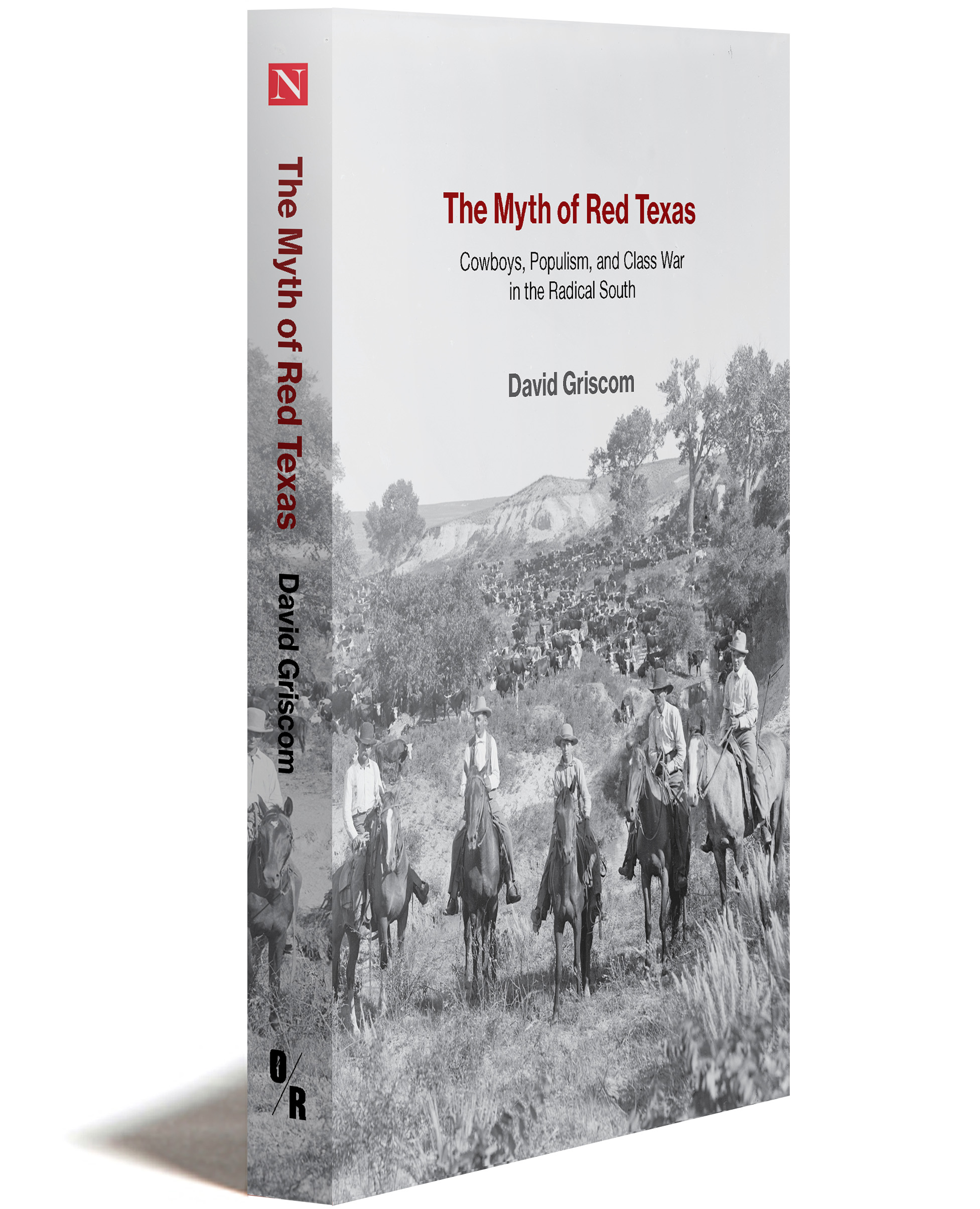
The Myth of Red Texas
“Reclaims Texas’s political history from dominant conservative narratives, deftly tracing a rich legacy of collectivist class struggle, radical politics, and democratic movements.”
—Emma Vigeland“Griscom takes Texas history and makes it sing a new song—one that reminds us of a radical past and enables us to understand why we feel the call to make America radically freer, more equal and democratic.”
—Harvey J. Kaye“In this totally unique and indispensable book . . . Griscom surfaces resonant truths about the state's political character and its possible futures.”
—Meagan Day“In this bracing and wonderfully written history of Texas, David Griscom has done us a great service. When Texans rebuild a vibrant left, this book will be an indispensable resource.”
—Vivek Chibber“A lively and informative retelling of the forgotten history of populist and socialist movements in Texas, replete with colorful characters. Essential reading for those reclaiming Texas from reactionary conservatism.”
—Seth Harpabout the bookabout
In blood-red states such as Texas, politics operates under the fallacy that these places were always conservative, so that it would be foolish, even utopian, to propose a progressive alternative. The Myth of Red Texas, David Griscom’s debut book, reassesses this misconception, arguing that the Lone Star Left must embrace its hidden past to reach a brighter future.
Cowboys on strike, socialists on the ballot, farmers fighting tooth and claw for what they termed the “cooperative commonwealth”—Texas was once a wellspring of radicals hell-bent on taking power from the robber barons who ruled the day. With a careful eye for history, Griscom demonstrates how Texans’ left-wing parties, from the populists to the socialists, organized against the Right and often won—and how reclaiming that tradition can help today’s Left break the political deadlock in Texas and beyond.
About The Author / Editor

Preview
Introduction - Can We Take Hold Of Our History?
The Texas State Capitol was built in its own very Texan way. After the Civil War, it was designed to stand fifteen feet taller than its counterpart in Washington. But, short on cash, the state government traded around 3 million acres of public land to a group of out-of-state investors to build it. To keep costs down, the state government also leased some 500 convict laborers for the project. Naturally, this pissed off the local unions, who had been asked to oversee the building’s construction. They refused to help with the project, at which point the Syndicate turned to foreign scab labor as a substitute. 86 Scotsmen out of Aberdeen descended on Austin to help complete the project. When the Scots discovered they were scabs, 24 refused to work. Ultimately, the Capitol was built, and the Syndicate successfully argued a court-mandated fine for violating labor laws down from $64,000 to $8,000, which the International Association of Granite Cutters angrily argued was clearly the result of the backroom deals. 1 If you grew up here as I did, this story sounds all too familiar.
Like the Alamo or the towering monument to the Battle of San Jacinto, where Mexican General Santa Anna surrendered to Sam Houston, the Capitol remains a symbol of Texan-ness, a visceral connection to our history, though usually the mythic version. Most Texans don’t know about the labor struggle that birthed the Texas Capitol. But upon learning the story, it doesn’t exactly flip the world on its axis. When people ask why Texas is the way it is—a bastion of conservatism—people can point to the Capitol and say, “Labor loses in Texas.” The story goes that Texans prefer conservatism, so-called states’ rights, and personal independence. But this wasn’t a foregone conclusion. It required the full force of the state to defeat many generations of Texas radicals, in labor and in politics. Even today, from time to time, you might catch a glimpse of a different kind of Texas. You might hear it in the chants of workers on strike, or in the clamor of mass protests. You might see it in the eyes of canvassers marching from house to house to tell you about their candidate. Perhaps you’ve felt it too, but often as soon as you have, it’s gone again. Snuffed out. Why?
Back in 2018, everyone was abuzz with possibility: Could Texas actually go blue? The hype began early that March, when Beto O’Rourke—a skateboard-loving El Paso Congressman with a penchant for standing and speaking on tabletops—handily won the Democratic primary. He’d already won the hearts and minds of national media, but his scrappy, social media-savvy campaign soon won the support of a lot of average Texans who were tired of the likes of his opponent, the Canadian-born Tea Party Republican Ted Cruz. In Austin, the city was littered with Beto O’Rourke yard signs. Even today, nearly a decade later, it’s not uncommon to see his signature “Whataburger” inspired bumper stickers on cars of all kinds. Having lived through a few of these hype cycles that Texas might finally “turn blue,” I had my doubts, but Beto’s campaign did something exciting. They were willing to travel and hold rallies all across the state. This kind of confidence—not just a belief that Texas is winnable, but a belief that Texans who had gone to the Republican Party could be won over—was something different from a Texas Democrat. Beto wasn’t hiding in the state’s safe blue areas; he was challenging the narrative of what Texas is, and what it could be.
It was not to be. On election night, Ted Cruz won again, by just over 2 percentage points. In its appraisal of the Beto campaign, The Texas Observer found that the results were a reminder that “Texas is still more like the state that has unflinchingly elected Trump, Ted Cruz, Greg Abbott, Dan Patrick, Rick Perry, and George W. Bush” than the one Beto tried to win. Beto appeared to many destined for some sort of higher office, but he failed to replicate the enthusiasm in his 2020 bid for president. More embarrassingly, in his 2022 campaign for governor, he lost to Abbott by nearly 11 points. Folks had been briefly willing to question the common wisdom that Texans will always be Republicans, but the dream was shattered yet again.
In subsequent races, fewer were willing to suspend their disbelief.Those who believed that Beto had run “too liberal” and that Texas Democrats would fare better with a more conservative Democrat got their chance in 2024. Colin Allred’s failed Senate campaign was in many ways the polar opposite of Beto’s 2018 run. Allred swapped big rallies for small gatherings, unscripted moments for television ads, and reminder after reminder that he played in the NFL. Where Beto had called out Trump’s border wall as “a racist reaction to a racist myth,” 3 Allred voted with Republicans in the House of Representatives to “condemn Biden’s Open Border policies.” Even in defeat, the two typified very different approaches to politics: In 2018, Beto took to the stage and told a cheering crowd, “I am so fucking proud of you guys,” whereas Allred, ever reserved, quoted the conservative prime minister Winston Churchill—“you can’t just be a patriot when your side wins.” 4 Meanwhile, in the six years separating their candidacies, the voter margin slipped further in Republicans’ favor.
Clearly, something isn’t working. Beto’s campaign aimed to make good on the old Democratic maxim that “Texas isn’t a red state, it’s a non-voting state,” by campaigning across the state’s 254 counties—from blue Travis County, where Austin resides, to red Borden County, which went over 90 percent to Trump in 2024. He had a bold ground game, mixed with what sounded like unabashed progressivism, though the details were often murky. In any case, this was a bottom-up operation, from its field offices to its voter database, driven by a passionate team of volunteers. By contrast, Allred only visited 34 of Texas’s 254 counties while raising a historic $90.2 million, much of which came from out of state, 5 and heavily relied on TV ads in Texas’s 20 media markets. Needless to say, the two campaigns had different target audiences in mind.
in the media
Related Interest
Related Interest
The Myth of Red Texas
“Reclaims Texas’s political history from dominant conservative narratives, deftly tracing a rich legacy of collectivist class struggle, radical politics, and democratic movements.”
—Emma Vigeland“Griscom takes Texas history and makes it sing a new song—one that reminds us of a radical past and enables us to understand why we feel the call to make America radically freer, more equal and democratic.”
—Harvey J. Kaye“In this totally unique and indispensable book . . . Griscom surfaces resonant truths about the state's political character and its possible futures.”
—Meagan Day“In this bracing and wonderfully written history of Texas, David Griscom has done us a great service. When Texans rebuild a vibrant left, this book will be an indispensable resource.”
—Vivek Chibber“A lively and informative retelling of the forgotten history of populist and socialist movements in Texas, replete with colorful characters. Essential reading for those reclaiming Texas from reactionary conservatism.”
—Seth Harpabout the bookabout
In blood-red states such as Texas, politics operates under the fallacy that these places were always conservative, so that it would be foolish, even utopian, to propose a progressive alternative. The Myth of Red Texas, David Griscom’s debut book, reassesses this misconception, arguing that the Lone Star Left must embrace its hidden past to reach a brighter future.
Cowboys on strike, socialists on the ballot, farmers fighting tooth and claw for what they termed the “cooperative commonwealth”—Texas was once a wellspring of radicals hell-bent on taking power from the robber barons who ruled the day. With a careful eye for history, Griscom demonstrates how Texans’ left-wing parties, from the populists to the socialists, organized against the Right and often won—and how reclaiming that tradition can help today’s Left break the political deadlock in Texas and beyond.
About The Author / Editor
Preview
Introduction - Can We Take Hold Of Our History?
The Texas State Capitol was built in its own very Texan way. After the Civil War, it was designed to stand fifteen feet taller than its counterpart in Washington. But, short on cash, the state government traded around 3 million acres of public land to a group of out-of-state investors to build it. To keep costs down, the state government also leased some 500 convict laborers for the project. Naturally, this pissed off the local unions, who had been asked to oversee the building’s construction. They refused to help with the project, at which point the Syndicate turned to foreign scab labor as a substitute. 86 Scotsmen out of Aberdeen descended on Austin to help complete the project. When the Scots discovered they were scabs, 24 refused to work. Ultimately, the Capitol was built, and the Syndicate successfully argued a court-mandated fine for violating labor laws down from $64,000 to $8,000, which the International Association of Granite Cutters angrily argued was clearly the result of the backroom deals. 1 If you grew up here as I did, this story sounds all too familiar.
Like the Alamo or the towering monument to the Battle of San Jacinto, where Mexican General Santa Anna surrendered to Sam Houston, the Capitol remains a symbol of Texan-ness, a visceral connection to our history, though usually the mythic version. Most Texans don’t know about the labor struggle that birthed the Texas Capitol. But upon learning the story, it doesn’t exactly flip the world on its axis. When people ask why Texas is the way it is—a bastion of conservatism—people can point to the Capitol and say, “Labor loses in Texas.” The story goes that Texans prefer conservatism, so-called states’ rights, and personal independence. But this wasn’t a foregone conclusion. It required the full force of the state to defeat many generations of Texas radicals, in labor and in politics. Even today, from time to time, you might catch a glimpse of a different kind of Texas. You might hear it in the chants of workers on strike, or in the clamor of mass protests. You might see it in the eyes of canvassers marching from house to house to tell you about their candidate. Perhaps you’ve felt it too, but often as soon as you have, it’s gone again. Snuffed out. Why?
Back in 2018, everyone was abuzz with possibility: Could Texas actually go blue? The hype began early that March, when Beto O’Rourke—a skateboard-loving El Paso Congressman with a penchant for standing and speaking on tabletops—handily won the Democratic primary. He’d already won the hearts and minds of national media, but his scrappy, social media-savvy campaign soon won the support of a lot of average Texans who were tired of the likes of his opponent, the Canadian-born Tea Party Republican Ted Cruz. In Austin, the city was littered with Beto O’Rourke yard signs. Even today, nearly a decade later, it’s not uncommon to see his signature “Whataburger” inspired bumper stickers on cars of all kinds. Having lived through a few of these hype cycles that Texas might finally “turn blue,” I had my doubts, but Beto’s campaign did something exciting. They were willing to travel and hold rallies all across the state. This kind of confidence—not just a belief that Texas is winnable, but a belief that Texans who had gone to the Republican Party could be won over—was something different from a Texas Democrat. Beto wasn’t hiding in the state’s safe blue areas; he was challenging the narrative of what Texas is, and what it could be.
It was not to be. On election night, Ted Cruz won again, by just over 2 percentage points. In its appraisal of the Beto campaign, The Texas Observer found that the results were a reminder that “Texas is still more like the state that has unflinchingly elected Trump, Ted Cruz, Greg Abbott, Dan Patrick, Rick Perry, and George W. Bush” than the one Beto tried to win. Beto appeared to many destined for some sort of higher office, but he failed to replicate the enthusiasm in his 2020 bid for president. More embarrassingly, in his 2022 campaign for governor, he lost to Abbott by nearly 11 points. Folks had been briefly willing to question the common wisdom that Texans will always be Republicans, but the dream was shattered yet again.
In subsequent races, fewer were willing to suspend their disbelief.Those who believed that Beto had run “too liberal” and that Texas Democrats would fare better with a more conservative Democrat got their chance in 2024. Colin Allred’s failed Senate campaign was in many ways the polar opposite of Beto’s 2018 run. Allred swapped big rallies for small gatherings, unscripted moments for television ads, and reminder after reminder that he played in the NFL. Where Beto had called out Trump’s border wall as “a racist reaction to a racist myth,” 3 Allred voted with Republicans in the House of Representatives to “condemn Biden’s Open Border policies.” Even in defeat, the two typified very different approaches to politics: In 2018, Beto took to the stage and told a cheering crowd, “I am so fucking proud of you guys,” whereas Allred, ever reserved, quoted the conservative prime minister Winston Churchill—“you can’t just be a patriot when your side wins.” 4 Meanwhile, in the six years separating their candidacies, the voter margin slipped further in Republicans’ favor.
Clearly, something isn’t working. Beto’s campaign aimed to make good on the old Democratic maxim that “Texas isn’t a red state, it’s a non-voting state,” by campaigning across the state’s 254 counties—from blue Travis County, where Austin resides, to red Borden County, which went over 90 percent to Trump in 2024. He had a bold ground game, mixed with what sounded like unabashed progressivism, though the details were often murky. In any case, this was a bottom-up operation, from its field offices to its voter database, driven by a passionate team of volunteers. By contrast, Allred only visited 34 of Texas’s 254 counties while raising a historic $90.2 million, much of which came from out of state, 5 and heavily relied on TV ads in Texas’s 20 media markets. Needless to say, the two campaigns had different target audiences in mind.