





Personal Responsibility, Inc.
“This is the text we need to move past bromides of self-care and the ways pop psychology puts the onus of therapy squarely onto individuals to figure out.”
—Dr. Steven Thrasher“A wide-ranging and in-depth examination of how mainstream psychotherapy endorses the worst of neoliberal capitalism, opening a space for critique and genuine change, valuing of the standpoints of the oppressed.”
—Dr. Ian Parker“A masterful, daringly counter-intuitive critique of the mental health industrial complex...infused with the politics of hope.”
—Dave Zirinabout the bookabout
Personal Responsibility, Inc. offers a one-of-a-kind investigation into psychotherapy’s complicity with the insidious and harmful effects of neoliberalism on individuals, relationships, and society.
Increasingly, therapy functions as an arm of neoliberal ideology—reinforcing its imperatives of personal responsibility, individualism, and relentless self-improvement. These values compel people to search inward for solutions to problems created and sustained by the system itself.
But this book goes beyond critique. It presents a vision—and concrete practices—for resisting neoliberalism’s pressure to seek individual fixes for structural problems.
It’s time for therapists and therapy-users alike to stop blaming non-normative brains, negative thinking, or poor coping skills for the widespread suffering we experience in a world on the brink. Instead, we must name neoliberalism for what it is, reclaim our shared humanity, and begin transforming distress into collective awareness and action.
Written by a practicing psychotherapist for an engaged, non-specialist audience, Personal Responsibility, Inc. is not a pitch for another therapeutic method. It’s an uncompromising call for a cultural course correction—and a starting point for real change.
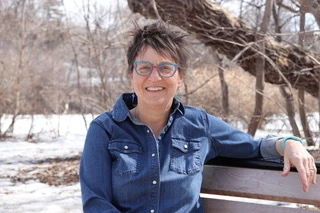
About The Author / Editor
Preview
Dear Neoliberalism,
I’m quite impressed with the way you’ve used the medicalization of the human experience to advance your interests. Biopsychiatry and Big Pharma are perfect partners for you to further your infiltration of the American psyche. Together, you’ve sold Americans on the idea that their brains are the source of most of their problems.
That’s not the only empty idea you’ve sold us. So many of us are now certain we’re mentally ill. In fact, you have us earnestly excavating our experiences for proof of pathology and monitoring our every move to gather data that point to a diagnosis.
From school-based mental health screenings to relaxation apps to online diagnostic quizzes, we are all literally counting every breath we take and every step we make. We are constantly measuring, monitoring, quantifying, and evaluating ourselves—and spending big bucks on it.
Millions of Americans are convinced that they have fill-in-the-blank diagnoses. People search for their identities in the DSM (BTW, congrats on making that a bestseller). You’ve convinced us to take a diseased view of every little thing we do. We are now primed to say, “Hi, it’s me; I’m the problem, it’s me; and these are my diagnoses to prove it.”
You have not merely cornered the current “mental health” market; you have actually created it. Not only are you a primary contributor to many of the actual problems and much of the distress in all of our lives, but you have duped tens of millions of people into seeing their brains/biochemistry/genetics as the sources of the problem—and convinced them to go to therapy.
In recent years, you have created an entire industry of text-based and online 24/7/365 virtual therapy. You have encouraged social media content creators—people reliant on the gig economy you profit from—to produce reductive, simplistic, incorrect-but-entertaining, bite-sized infomercials based on the convenient untruths of biopsychiatry and the DSM. You have governments at every level throwing money at the “mental health crisis,” much of it in multiple wrong directions.
Meanwhile, government churns out more policies that exacerbate that crisis. Then they fund and arm police departments to the max to beat the resistance out of people.
I’m wondering, NL: what would happen to you if people rejected the medicalization of human experience and the biologization of suffering? What if we all refused to ask, What’s wrong with me? and instead asked, What happened—and what continues to happen—to us? What if we had different ways to tell our stories of despair? What if, instead of individualizing our suffering, we politicized it?
Where would you be if we refused the faux identities of DSM symptomatology? What if, instead of using the language of pathology, we told rich, contextualized, personal stories about our lives? What if we had ways to story our lives that refused—and refuted—the individualization of social problems?
What might become possible when we ask such questions, instead of taking what you and the DSM have to say as gospel?
Just asking,
Julie
in the media
Related Interest
Related Interest
Personal Responsibility, Inc.
“This is the text we need to move past bromides of self-care and the ways pop psychology puts the onus of therapy squarely onto individuals to figure out.”
—Dr. Steven Thrasher“A wide-ranging and in-depth examination of how mainstream psychotherapy endorses the worst of neoliberal capitalism, opening a space for critique and genuine change, valuing of the standpoints of the oppressed.”
—Dr. Ian Parker“A masterful, daringly counter-intuitive critique of the mental health industrial complex...infused with the politics of hope.”
—Dave Zirinabout the bookabout
Personal Responsibility, Inc. offers a one-of-a-kind investigation into psychotherapy’s complicity with the insidious and harmful effects of neoliberalism on individuals, relationships, and society.
Increasingly, therapy functions as an arm of neoliberal ideology—reinforcing its imperatives of personal responsibility, individualism, and relentless self-improvement. These values compel people to search inward for solutions to problems created and sustained by the system itself.
But this book goes beyond critique. It presents a vision—and concrete practices—for resisting neoliberalism’s pressure to seek individual fixes for structural problems.
It’s time for therapists and therapy-users alike to stop blaming non-normative brains, negative thinking, or poor coping skills for the widespread suffering we experience in a world on the brink. Instead, we must name neoliberalism for what it is, reclaim our shared humanity, and begin transforming distress into collective awareness and action.
Written by a practicing psychotherapist for an engaged, non-specialist audience, Personal Responsibility, Inc. is not a pitch for another therapeutic method. It’s an uncompromising call for a cultural course correction—and a starting point for real change.
About The Author / Editor
Preview
Dear Neoliberalism,
I’m quite impressed with the way you’ve used the medicalization of the human experience to advance your interests. Biopsychiatry and Big Pharma are perfect partners for you to further your infiltration of the American psyche. Together, you’ve sold Americans on the idea that their brains are the source of most of their problems.
That’s not the only empty idea you’ve sold us. So many of us are now certain we’re mentally ill. In fact, you have us earnestly excavating our experiences for proof of pathology and monitoring our every move to gather data that point to a diagnosis.
From school-based mental health screenings to relaxation apps to online diagnostic quizzes, we are all literally counting every breath we take and every step we make. We are constantly measuring, monitoring, quantifying, and evaluating ourselves—and spending big bucks on it.
Millions of Americans are convinced that they have fill-in-the-blank diagnoses. People search for their identities in the DSM (BTW, congrats on making that a bestseller). You’ve convinced us to take a diseased view of every little thing we do. We are now primed to say, “Hi, it’s me; I’m the problem, it’s me; and these are my diagnoses to prove it.”
You have not merely cornered the current “mental health” market; you have actually created it. Not only are you a primary contributor to many of the actual problems and much of the distress in all of our lives, but you have duped tens of millions of people into seeing their brains/biochemistry/genetics as the sources of the problem—and convinced them to go to therapy.
In recent years, you have created an entire industry of text-based and online 24/7/365 virtual therapy. You have encouraged social media content creators—people reliant on the gig economy you profit from—to produce reductive, simplistic, incorrect-but-entertaining, bite-sized infomercials based on the convenient untruths of biopsychiatry and the DSM. You have governments at every level throwing money at the “mental health crisis,” much of it in multiple wrong directions.
Meanwhile, government churns out more policies that exacerbate that crisis. Then they fund and arm police departments to the max to beat the resistance out of people.
I’m wondering, NL: what would happen to you if people rejected the medicalization of human experience and the biologization of suffering? What if we all refused to ask, What’s wrong with me? and instead asked, What happened—and what continues to happen—to us? What if we had different ways to tell our stories of despair? What if, instead of individualizing our suffering, we politicized it?
Where would you be if we refused the faux identities of DSM symptomatology? What if, instead of using the language of pathology, we told rich, contextualized, personal stories about our lives? What if we had ways to story our lives that refused—and refuted—the individualization of social problems?
What might become possible when we ask such questions, instead of taking what you and the DSM have to say as gospel?
Just asking,
Julie