


Related Interest


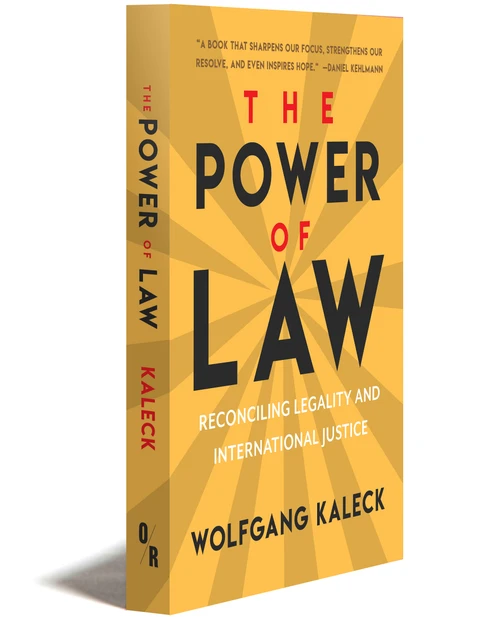
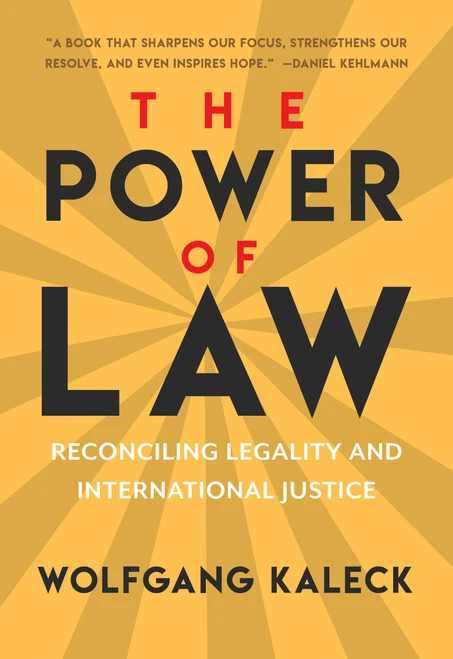
The Power of Law
“A lawyer with a reputation for punching up.”
—The New Republic“A book that sharpens our focus, strengthens our resolve, and even inspires hope.”
—Daniel Kehlmannabout the bookabout
What good is the law? From Russia’s invasion of Ukraine to the international community’s failure to enforce the ICC arrest warrant against Benjamin Netanyahu over alleged war crimes, the foundations of the international order are being called into question. As governments increasingly disregard international law and human rights, one of the world's leading human rights lawyers asks whether the rule of law can withstand this moment—or whether the law of the strongest will prevail.
In Power of the Law, Wolfgang Kaleck, drawing on decades of legal practice and activism, proposes reforms that could restore the power of the law. Tracing how principles of international law and universal human rights emerged from the devastation of war, he examines the forces now threatening to erode them.
At a time when the human rights project has endured criticism for being toothless or even for providing a pretext for military invasions, Kaleck argues that current global crises, from inequality to ecological collapse and the “age of pandemics,” can be countered by defending international law and reinventing human rights work through feminist, decolonial, and ecological interventions.
About The Author / Editor

Preview
The Rule of Law Under Pressure: Migration, Breaches of the Law, and Populism
Whether a state’s political commitment to international law and fundamental rights is genuine is revealed in times when—for political reasons—marginalized or unpopular groups are left defenseless. Adherence to the domestic rule of law always goes hand in hand with adherence to international law. Currently, however, there is a discernible trend—both internationally and in Germany—toward denying the most vulnerable groups their rights; human and fundamental rights are being eroded. Added to this is growing criticism of jurisdiction by right-wing politicians. Thus, it is not only individual court rulings but the rule of law itself that is coming under fire. Alleged political advantage is said to outweigh compliance with existing law.
Legal scholar Max Pichl has been observing for years—particularly in asylum and migration policy—an attempt to reinterpret the concept of the rule of law in the sense of “law and order.” Fundamental and human rights are being called into question at a rapid pace. Furthermore, there have been repeated instances of open violations of the law by the executive branch, which has disregarded unwelcome court rulings, for example regarding deportations of refugees. Populist narratives such as “forfeited right of hospitality” or the “rule of injustice” were constructed to politically justify legal violations. During the so-called “refugee crisis” in 2015, for instance, politicians and prominent legal scholars went so far as to label Germany’s welcoming migration policy a “breach of the Constitution,” arguing that the decision to admit asylum seekers without formal border checks was in violation of the law. However, this was inconsistent with the prevailing legal framework. In a Spiegel interview in 2025, Professor Daniel Thym suggested applying human rights “less strictly” and instead showing “a certain degree of harshness.” The aim is to roll back human rights protections for refugees.
Legal positions still served at least as a reference point for political argumentation. Yet in Europe, there have long been testing grounds for authoritarian regimes, most prominently Hungary, where under Orbán rights to freedom and equality were curtailed in favor of the “will of the people,” with the judiciary subordinated to the ruling party. The rule of law was effectively abolished there. Countries such as Switzerland and the United Kingdom have also threatened to withdraw from the European Convention on Human Rights due to unpopular rulings on asylum and migration. Austria, Belgium, the Czech Republic, the Baltic states, and Poland are currently attempting to limit the jurisdiction of the European Court of Human Rights in Strasbourg and give preference to national courts. At the same time, governments in Europe and the US are systematically appointing judges who align with their views—a strategy known as court-packing.
In Germany, too, attempts to discredit the country’s own judiciary are on the rise. Members of the conservative parties (CDU/CSU) spoke of “shitty courts” and called for “executive disobedience.” In the summer of 2025, the CDU/CSU and the AfD (Alternative for Germany) harshly criticized a ruling by the Berlin Administrative Court that prohibited the deportation of three Somali refugees. CSU state parliamentary group leader Alexander Hoffmann spoke of “absurd maneuvers” and a “staged event by asylum activists” by the organization Pro Asyl. He claimed that for years, this organization has been advising refugees to throw away their identification documents to make deportations more difficult. Federal Interior Minister Alexander Dobrindt (CSU) stated that the practice of turning refugees away at the borders would continue despite court rulings clearly prohibiting these measures. He saw no reason to alter his course because of a single court decision. Martin Hess—a politician of the far-right AfD party—was even more explicit: “Anyone who negates the security interests of German citizens in this way must ask themselves whether they are actually still administering justice in the name of the German people.” This rhetoric signals that a breach of the law is being deliberately accepted despite the administration’s obligation to uphold law and order, as enshrined in the German Constitution. The goal is to achieve political effects through a demonstrative disregard for court rulings.
in the media
Related Interest
Related Interest
The Power of Law
“A lawyer with a reputation for punching up.”
—The New Republic“A book that sharpens our focus, strengthens our resolve, and even inspires hope.”
—Daniel Kehlmannabout the bookabout
What good is the law? From Russia’s invasion of Ukraine to the international community’s failure to enforce the ICC arrest warrant against Benjamin Netanyahu over alleged war crimes, the foundations of the international order are being called into question. As governments increasingly disregard international law and human rights, one of the world's leading human rights lawyers asks whether the rule of law can withstand this moment—or whether the law of the strongest will prevail.
In Power of the Law, Wolfgang Kaleck, drawing on decades of legal practice and activism, proposes reforms that could restore the power of the law. Tracing how principles of international law and universal human rights emerged from the devastation of war, he examines the forces now threatening to erode them.
At a time when the human rights project has endured criticism for being toothless or even for providing a pretext for military invasions, Kaleck argues that current global crises, from inequality to ecological collapse and the “age of pandemics,” can be countered by defending international law and reinventing human rights work through feminist, decolonial, and ecological interventions.
About The Author / Editor
Preview
The Rule of Law Under Pressure: Migration, Breaches of the Law, and Populism
Whether a state’s political commitment to international law and fundamental rights is genuine is revealed in times when—for political reasons—marginalized or unpopular groups are left defenseless. Adherence to the domestic rule of law always goes hand in hand with adherence to international law. Currently, however, there is a discernible trend—both internationally and in Germany—toward denying the most vulnerable groups their rights; human and fundamental rights are being eroded. Added to this is growing criticism of jurisdiction by right-wing politicians. Thus, it is not only individual court rulings but the rule of law itself that is coming under fire. Alleged political advantage is said to outweigh compliance with existing law.
Legal scholar Max Pichl has been observing for years—particularly in asylum and migration policy—an attempt to reinterpret the concept of the rule of law in the sense of “law and order.” Fundamental and human rights are being called into question at a rapid pace. Furthermore, there have been repeated instances of open violations of the law by the executive branch, which has disregarded unwelcome court rulings, for example regarding deportations of refugees. Populist narratives such as “forfeited right of hospitality” or the “rule of injustice” were constructed to politically justify legal violations. During the so-called “refugee crisis” in 2015, for instance, politicians and prominent legal scholars went so far as to label Germany’s welcoming migration policy a “breach of the Constitution,” arguing that the decision to admit asylum seekers without formal border checks was in violation of the law. However, this was inconsistent with the prevailing legal framework. In a Spiegel interview in 2025, Professor Daniel Thym suggested applying human rights “less strictly” and instead showing “a certain degree of harshness.” The aim is to roll back human rights protections for refugees.
Legal positions still served at least as a reference point for political argumentation. Yet in Europe, there have long been testing grounds for authoritarian regimes, most prominently Hungary, where under Orbán rights to freedom and equality were curtailed in favor of the “will of the people,” with the judiciary subordinated to the ruling party. The rule of law was effectively abolished there. Countries such as Switzerland and the United Kingdom have also threatened to withdraw from the European Convention on Human Rights due to unpopular rulings on asylum and migration. Austria, Belgium, the Czech Republic, the Baltic states, and Poland are currently attempting to limit the jurisdiction of the European Court of Human Rights in Strasbourg and give preference to national courts. At the same time, governments in Europe and the US are systematically appointing judges who align with their views—a strategy known as court-packing.
In Germany, too, attempts to discredit the country’s own judiciary are on the rise. Members of the conservative parties (CDU/CSU) spoke of “shitty courts” and called for “executive disobedience.” In the summer of 2025, the CDU/CSU and the AfD (Alternative for Germany) harshly criticized a ruling by the Berlin Administrative Court that prohibited the deportation of three Somali refugees. CSU state parliamentary group leader Alexander Hoffmann spoke of “absurd maneuvers” and a “staged event by asylum activists” by the organization Pro Asyl. He claimed that for years, this organization has been advising refugees to throw away their identification documents to make deportations more difficult. Federal Interior Minister Alexander Dobrindt (CSU) stated that the practice of turning refugees away at the borders would continue despite court rulings clearly prohibiting these measures. He saw no reason to alter his course because of a single court decision. Martin Hess—a politician of the far-right AfD party—was even more explicit: “Anyone who negates the security interests of German citizens in this way must ask themselves whether they are actually still administering justice in the name of the German people.” This rhetoric signals that a breach of the law is being deliberately accepted despite the administration’s obligation to uphold law and order, as enshrined in the German Constitution. The goal is to achieve political effects through a demonstrative disregard for court rulings.