


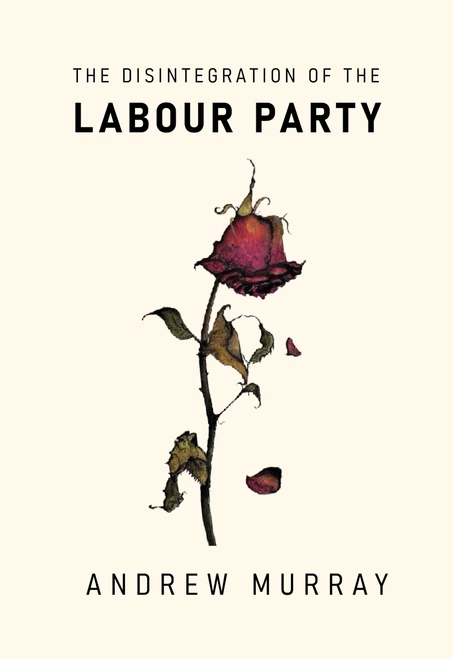


The Disintegration of the Labour Party
about the bookabout
A change of leadership has brought new energy to the Labour Party and raised its standing in the polls. But is this a Burnham bounce, or bunny hop? Has the historic party of Britain’s center-left truly revived, or are these the twitchings of a corpse?
Tracing the long-term erosion of Labour’s working-class base, The Disintegration of the Labour Party argues that the party has failed to construct a durable replacement coalition capable of reliably winning power or governing with purpose. Having embraced a neoliberal settlement that does not deliver for most people, Labour has shed voters to its left as well as right, and to nationalists of all stripes. The brief resurgence under Jeremy Corbyn in 2017 showed that a radical program of democratic empowerment might yet win them back, but this experiment was crushed and the party reorganized to prevent a repeat.
Drawing on deep historical knowledge, granular electoral data, and in-person reporting from battleground constituencies, Andrew Murray dismantles the mythology of Labour’s supposed recovery under Keir Starmer, including claims the party regained its standing in traditional Labour heartlands of the “red wall.” The book reveals instead how Starmer’s establishment-friendly approach to the economy, foreign policy, and domestic governance further alienated working-class voters, minority groups, and young metropolitans alike.
Situating Labour’s decline within the wider crisis of democratic politics since the 2008 financial crash, the book probes the limits of what any center-left formation can achieve and considers how socialist politics might find renewed expression.
About The Author / Editor

Preview
Mark the date. On May 7, 2026, the Labour Party disintegrated as a country-wide electoral force, after more than a century. It was marginalised in devolved elections in Scotland and Wales, the latter a heartland for the party since its foundation and both of which are essential components of any Labour parliamentary majority. It was also obliterated in local elections across swathes of ex-industrial England, losing every council seat to the far-right Reform UK from Sunderland to Wigan. And in London and other big cities, Labour saw its core urban voters defect to the Greens and, in places, to independent community candidates. Councils like Hackney, Lewisham, Waltham Forest, Haringey, and Lambeth are now coloured green on the electoral map.
Mid-term blues? More like night drawing in on an entrenched but exhausted political project. May 7 was no aberration but rather the most dramatic expression to date of trends long observable. In February 2026, a local, female plumber was elected the new MP for Gorton and Denton in Manchester, winning a seat that had returned Labour MPs since there was a Labour Party to vote for. But Hannah Spencer was not the Labour candidate. She stood for the Green Party in a seat that had not even been on its target list, and handed the Greens their first-ever by-election victory.
She became the latest and most threatening of a series of candidates winning traditional Labour strongholds from the left. Most threatening because she stood not as an independent, nor for a one-man band party, but for an organisation capable of repeating the feat in constituencies across the country. Hannah Spencer is Labour’s crisis with a human face. The previous summer, a poll had put the new socialist party founded by Jeremy Corbyn and Zarah Sultana level-pegging with Labour at 15 percent each, despite the former not actually being extant at the time of polling. Then, in October, the unprecedented had occurred: a survey conducted by pollsters Find Out Now put the Green Party on 17 percent in voting intentions—one point ahead of the governing party. Thus a party to the left of Labour outpolled it for the first time. If the only threat facing the Labour Party was from its left, it might be negotiable. But the local council results confirmed that in many former strongholds, Labour is also losing a slice of its vote to the hard right. In Gorton and Denton itself, Labour was beaten not only by the Greens but also by the scowling sectarian Matthew Goodwin, candidate of the far-right Reform UK. Reform has gained ground among working-class voters in communities that Labour abandoned in its decades-long embrace of the free market, and was leading national polls prior to Labour’s dispatch of Starmer. Across large areas of southern England, Labour has long been supplanted by the Liberal Democrats as the main alternative to the right. In Scotland, Labour’s grip on the working-class vote has been broken by the Scottish National Party; the same process has now reached Wales, with Plaid Cymru established as the first choice for those seeking progressive change or simply to resist Reform. The days when the Labour–Tory swing was the only thing that really counted on election night are long gone. In the current era of five-party politics in England and six in Scotland and Wales, Labour is floundering.
The Conservative Party remains despised across the country, undershooting in the polls what was already its worst-ever election result in 2024 and losing over five hundred council seats in May 2026, a highly unusual circumstance for the official opposition. The Conservatives, too, are squeezed between the rampant hard right and the Liberal Democrats to their left.
Labour is heading straight for a similar denouement. The next general election is not due until 2029. Were it held today, neither of the two political parties that have headed the administration in Westminster uninterruptedly since 1922 would secure a majority. Both face the dilemmas and paradoxes of the first-past-the-post electoral system which can see Labour lose seats to Reform because it has lost votes to the Greens, and Tory MPs fall to the Liberal Democrats because their voters have siphoned off toward Reform.
But this is about more than elections and polls, more than ‘red walls’ and swing voting blocs, more than cabinets and manifestos. It is the passing of a political movement, an epoch in democratic politics, and the main articulation of the working-class voice in Britain’s national life. Former Labour cabinet member Clare Short summed up the electoral problem succinctly at the start of 2026: ‘Labour’s coalition is breaking up. A lot of the moral and intellectual people are disgruntled. And those on lower incomes, they’re dissatisfied. Labour doesn’t seem to be their party anymore.’ Short, never on the socialist left of the party, added that there was ‘no place for people like me anymore’. From the other side of the fence, The Telegraph’s Tim Stanley made the point pithily: ‘Labour cannot fix us because it cannot fix itself, because it is a hangover of a 20th century party that no longer enjoys a class basis or a mobilising philosophy.’
The disintegration of the Labour Party is in full swing.
in the media
Related Interest
Related Interest
The Disintegration of the Labour Party
about the bookabout
A change of leadership has brought new energy to the Labour Party and raised its standing in the polls. But is this a Burnham bounce, or bunny hop? Has the historic party of Britain’s center-left truly revived, or are these the twitchings of a corpse?
Tracing the long-term erosion of Labour’s working-class base, The Disintegration of the Labour Party argues that the party has failed to construct a durable replacement coalition capable of reliably winning power or governing with purpose. Having embraced a neoliberal settlement that does not deliver for most people, Labour has shed voters to its left as well as right, and to nationalists of all stripes. The brief resurgence under Jeremy Corbyn in 2017 showed that a radical program of democratic empowerment might yet win them back, but this experiment was crushed and the party reorganized to prevent a repeat.
Drawing on deep historical knowledge, granular electoral data, and in-person reporting from battleground constituencies, Andrew Murray dismantles the mythology of Labour’s supposed recovery under Keir Starmer, including claims the party regained its standing in traditional Labour heartlands of the “red wall.” The book reveals instead how Starmer’s establishment-friendly approach to the economy, foreign policy, and domestic governance further alienated working-class voters, minority groups, and young metropolitans alike.
Situating Labour’s decline within the wider crisis of democratic politics since the 2008 financial crash, the book probes the limits of what any center-left formation can achieve and considers how socialist politics might find renewed expression.
About The Author / Editor
Preview
Mark the date. On May 7, 2026, the Labour Party disintegrated as a country-wide electoral force, after more than a century. It was marginalised in devolved elections in Scotland and Wales, the latter a heartland for the party since its foundation and both of which are essential components of any Labour parliamentary majority. It was also obliterated in local elections across swathes of ex-industrial England, losing every council seat to the far-right Reform UK from Sunderland to Wigan. And in London and other big cities, Labour saw its core urban voters defect to the Greens and, in places, to independent community candidates. Councils like Hackney, Lewisham, Waltham Forest, Haringey, and Lambeth are now coloured green on the electoral map.
Mid-term blues? More like night drawing in on an entrenched but exhausted political project. May 7 was no aberration but rather the most dramatic expression to date of trends long observable. In February 2026, a local, female plumber was elected the new MP for Gorton and Denton in Manchester, winning a seat that had returned Labour MPs since there was a Labour Party to vote for. But Hannah Spencer was not the Labour candidate. She stood for the Green Party in a seat that had not even been on its target list, and handed the Greens their first-ever by-election victory.
She became the latest and most threatening of a series of candidates winning traditional Labour strongholds from the left. Most threatening because she stood not as an independent, nor for a one-man band party, but for an organisation capable of repeating the feat in constituencies across the country. Hannah Spencer is Labour’s crisis with a human face. The previous summer, a poll had put the new socialist party founded by Jeremy Corbyn and Zarah Sultana level-pegging with Labour at 15 percent each, despite the former not actually being extant at the time of polling. Then, in October, the unprecedented had occurred: a survey conducted by pollsters Find Out Now put the Green Party on 17 percent in voting intentions—one point ahead of the governing party. Thus a party to the left of Labour outpolled it for the first time. If the only threat facing the Labour Party was from its left, it might be negotiable. But the local council results confirmed that in many former strongholds, Labour is also losing a slice of its vote to the hard right. In Gorton and Denton itself, Labour was beaten not only by the Greens but also by the scowling sectarian Matthew Goodwin, candidate of the far-right Reform UK. Reform has gained ground among working-class voters in communities that Labour abandoned in its decades-long embrace of the free market, and was leading national polls prior to Labour’s dispatch of Starmer. Across large areas of southern England, Labour has long been supplanted by the Liberal Democrats as the main alternative to the right. In Scotland, Labour’s grip on the working-class vote has been broken by the Scottish National Party; the same process has now reached Wales, with Plaid Cymru established as the first choice for those seeking progressive change or simply to resist Reform. The days when the Labour–Tory swing was the only thing that really counted on election night are long gone. In the current era of five-party politics in England and six in Scotland and Wales, Labour is floundering.
The Conservative Party remains despised across the country, undershooting in the polls what was already its worst-ever election result in 2024 and losing over five hundred council seats in May 2026, a highly unusual circumstance for the official opposition. The Conservatives, too, are squeezed between the rampant hard right and the Liberal Democrats to their left.
Labour is heading straight for a similar denouement. The next general election is not due until 2029. Were it held today, neither of the two political parties that have headed the administration in Westminster uninterruptedly since 1922 would secure a majority. Both face the dilemmas and paradoxes of the first-past-the-post electoral system which can see Labour lose seats to Reform because it has lost votes to the Greens, and Tory MPs fall to the Liberal Democrats because their voters have siphoned off toward Reform.
But this is about more than elections and polls, more than ‘red walls’ and swing voting blocs, more than cabinets and manifestos. It is the passing of a political movement, an epoch in democratic politics, and the main articulation of the working-class voice in Britain’s national life. Former Labour cabinet member Clare Short summed up the electoral problem succinctly at the start of 2026: ‘Labour’s coalition is breaking up. A lot of the moral and intellectual people are disgruntled. And those on lower incomes, they’re dissatisfied. Labour doesn’t seem to be their party anymore.’ Short, never on the socialist left of the party, added that there was ‘no place for people like me anymore’. From the other side of the fence, The Telegraph’s Tim Stanley made the point pithily: ‘Labour cannot fix us because it cannot fix itself, because it is a hangover of a 20th century party that no longer enjoys a class basis or a mobilising philosophy.’
The disintegration of the Labour Party is in full swing.