


Related Interest


Tehran Diaries
about the bookabout
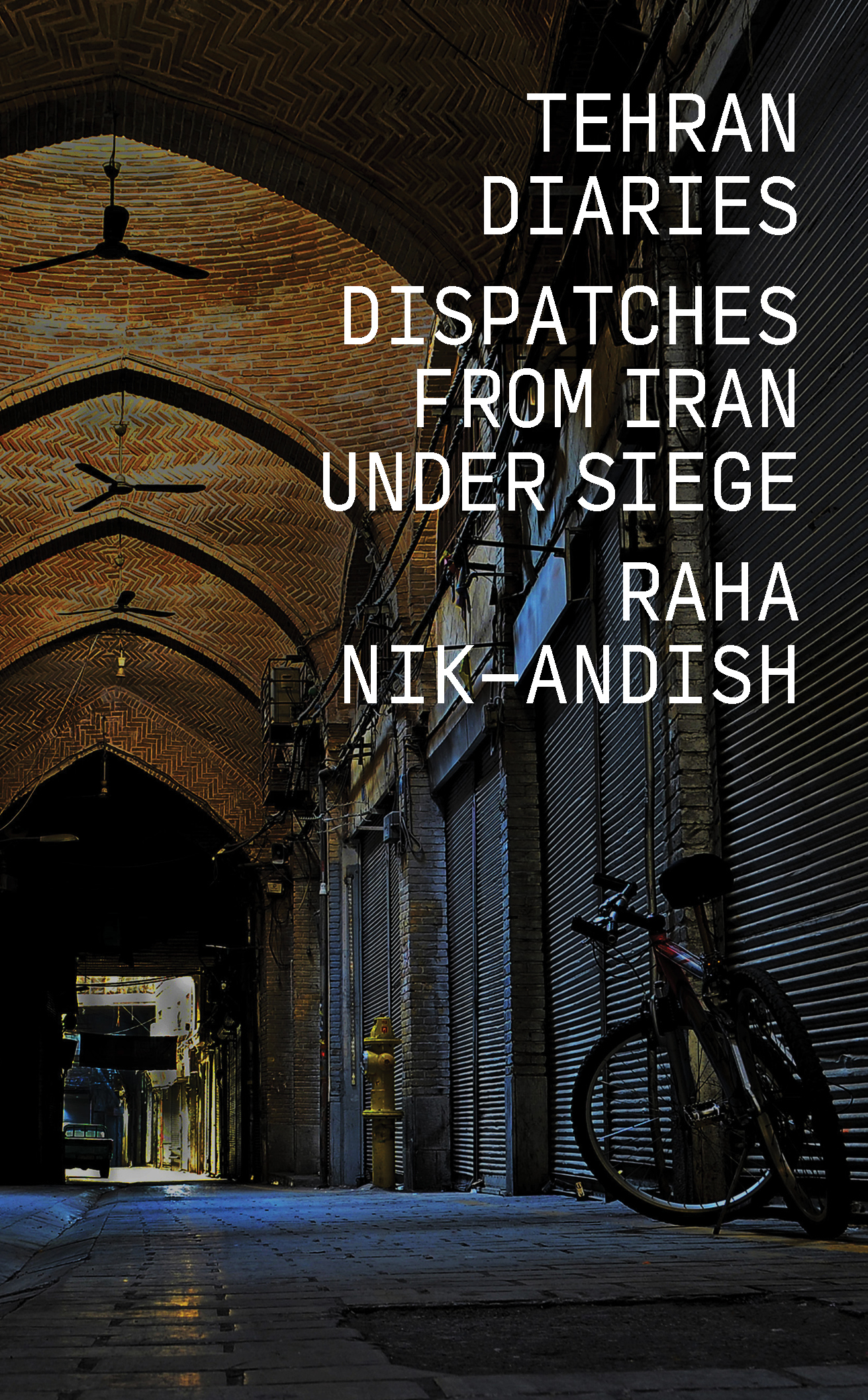
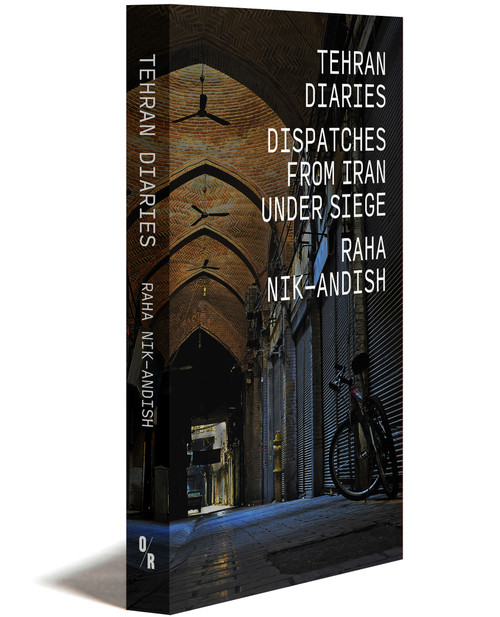
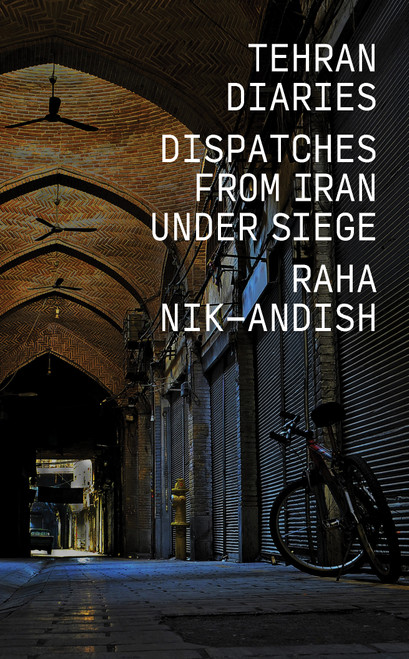
In Iran’s capital city, the shops of the bazaar are shuttered, the streets quiet with fear. The internet isn’t working, conversations are confused and urgent, fraught with anxious expectation. Soon the US-Israeli bombardment will begin and the rain will turn black with fuel, burning the lungs and skin.
In this searing and contemplative work, writer, academic, and Tehran resident Raha Nik-Andish documents life in the Islamic Republic during the days and months leading up to “Operation Epic Fury.” A rarely-seen portrait of a society in freefall, this is Tehran on the brink: protests over the collapse of the currency crushed, taxicabs circling the city searching for passengers and meager fares, burned-out garbage cans and the windows taped up.
What does it mean to exist under siege? How does one negotiate a blackout when trapped between devastation from the sky and repression on the street? How to know what’s happening? How to get the message out? Piercing, poignant, and delicately observed, this is the vital story of a city at the end of the world—and an act of witness against darkness.
About The Author / Editor
Raha Nik-Andish is the pen name for a writer, translator, and art historian who lives in Tehran. Raha has written features and essays for the London Review of Books and the Markaz Review. Tehran Diaries is their first book.
Preview
A NOTE ON THE TEXT
April 2026
In the hours following the “elimination” of Iran’s Supreme Leader Ayatollah Ali Khamenei by the US and Israel on 28 February 2026, the Iranian government turned the internet off …
Despite the blackout, we began working on this text with Raha Nik-Andish on 4 March. We communicated through an intermediary and friend of Raha’s that he – at great personal risk – intermittently managed to keep in touch with through the shutdown and siege. At the same time, government text messages rolled in on his phone, threatening action against those seeking contact with the outside world, taking pictures or documenting evidence. Meanwhile, President Donald Trump was describing the US and Israeli aerial attacks against Iran as ‘the largest, most complex, most overwhelming military offensives the world has ever seen’. This was Operation Epic Fury: banks, bridges, residential buildings, a school in Minab full of children, destroyed from above. As the war raged on, the question became not so much how we would work on this text, but whether Raha was alive or safe – whatever safety means under bombardment.
Images that emerge of Iran are often tightly controlled. From the Tasnim News Agency, the Islamic Revolutionary Guard’s semi-official news source, we get one side of the story. There are the mourners in Enghelab Square, thousands in black clamouring to grieve Khamenei. There are the sustained rallies in support of the regime. Alternatively, observed from above by a pilot in an F-15 jet, the view of Iran is flattened entirely: its buildings, landmarks and people are reduced to pure data, or pure target.
Raha’s work is rare and important because it gives us Iran as a multitude of worlds. Through his work, we receive a view of a society that is not a static assemblage of clichés but shifting and dynamic. It is an intensely human portrait of a place amid moments of tenderness, hope, disaster and fear. Iran is fractured and embattled but it continues to exist.
This book starts with the death of Khamenei and the beginning of Operation Epic Fury and then traces backwards. There is the war, the chaos of death, the smoke after a direct hit, but there are also the days and weeks leading up to it, the waiting, the rationing, the economic crisis and growing social division. In going backwards, we attempt to ask how we got here. Despite signs of a tentative ceasefire negotiation in early April 2026, war is the ongoing reality in Iran, and across the Middle East – in Lebanon, Gaza and the Gulf. But before war, and during it, there was life too. This book is Raha Nik-Andish’s record of that life, and an archive for the future.
in the media
Related Interest
Related Interest
Tehran Diaries
about the bookabout
In Iran’s capital city, the shops of the bazaar are shuttered, the streets quiet with fear. The internet isn’t working, conversations are confused and urgent, fraught with anxious expectation. Soon the US-Israeli bombardment will begin and the rain will turn black with fuel, burning the lungs and skin.
In this searing and contemplative work, writer, academic, and Tehran resident Raha Nik-Andish documents life in the Islamic Republic during the days and months leading up to “Operation Epic Fury.” A rarely-seen portrait of a society in freefall, this is Tehran on the brink: protests over the collapse of the currency crushed, taxicabs circling the city searching for passengers and meager fares, burned-out garbage cans and the windows taped up.
What does it mean to exist under siege? How does one negotiate a blackout when trapped between devastation from the sky and repression on the street? How to know what’s happening? How to get the message out? Piercing, poignant, and delicately observed, this is the vital story of a city at the end of the world—and an act of witness against darkness.
About The Author / Editor
Raha Nik-Andish is the pen name for a writer, translator, and art historian who lives in Tehran. Raha has written features and essays for the London Review of Books and the Markaz Review. Tehran Diaries is their first book.
Preview
A NOTE ON THE TEXT
April 2026
In the hours following the “elimination” of Iran’s Supreme Leader Ayatollah Ali Khamenei by the US and Israel on 28 February 2026, the Iranian government turned the internet off …
Despite the blackout, we began working on this text with Raha Nik-Andish on 4 March. We communicated through an intermediary and friend of Raha’s that he – at great personal risk – intermittently managed to keep in touch with through the shutdown and siege. At the same time, government text messages rolled in on his phone, threatening action against those seeking contact with the outside world, taking pictures or documenting evidence. Meanwhile, President Donald Trump was describing the US and Israeli aerial attacks against Iran as ‘the largest, most complex, most overwhelming military offensives the world has ever seen’. This was Operation Epic Fury: banks, bridges, residential buildings, a school in Minab full of children, destroyed from above. As the war raged on, the question became not so much how we would work on this text, but whether Raha was alive or safe – whatever safety means under bombardment.
Images that emerge of Iran are often tightly controlled. From the Tasnim News Agency, the Islamic Revolutionary Guard’s semi-official news source, we get one side of the story. There are the mourners in Enghelab Square, thousands in black clamouring to grieve Khamenei. There are the sustained rallies in support of the regime. Alternatively, observed from above by a pilot in an F-15 jet, the view of Iran is flattened entirely: its buildings, landmarks and people are reduced to pure data, or pure target.
Raha’s work is rare and important because it gives us Iran as a multitude of worlds. Through his work, we receive a view of a society that is not a static assemblage of clichés but shifting and dynamic. It is an intensely human portrait of a place amid moments of tenderness, hope, disaster and fear. Iran is fractured and embattled but it continues to exist.
This book starts with the death of Khamenei and the beginning of Operation Epic Fury and then traces backwards. There is the war, the chaos of death, the smoke after a direct hit, but there are also the days and weeks leading up to it, the waiting, the rationing, the economic crisis and growing social division. In going backwards, we attempt to ask how we got here. Despite signs of a tentative ceasefire negotiation in early April 2026, war is the ongoing reality in Iran, and across the Middle East – in Lebanon, Gaza and the Gulf. But before war, and during it, there was life too. This book is Raha Nik-Andish’s record of that life, and an archive for the future.